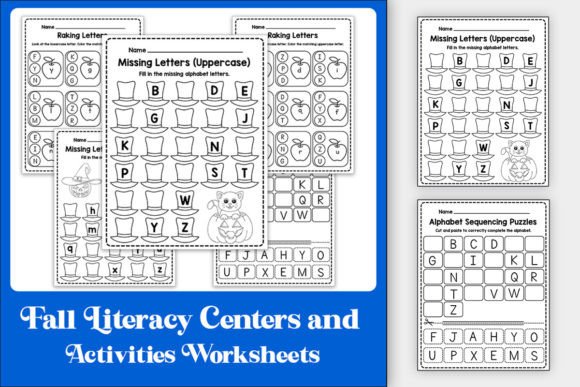
Back to School Fall Literacy Activities
As summer winds down and crisp air settles in, educators, homeschoolers, and curriculum designers begin preparing for one of the most pivotal transitions of the academic year: back to school in fall. This season isn’t just about new supplies and classroom routines—it’s a prime opportunity to ground early literacy instruction in warmth, wonder, and seasonal relevance. That’s where Back to School Fall Literacy Activities truly shines: a thoughtfully designed, no-prep resource that transforms autumn’s natural appeal into meaningful, standards-aligned learning experiences for Kindergarten students.
Why These Autumn Literacy Activities Work Where Others Don’t
Not all seasonal worksheets deliver equal impact—and many sacrifice pedagogical rigor for cuteness. What sets this packet apart is its intentional alignment with foundational literacy milestones while honoring how young children learn best: through repetition, visual cues, tactile thinking (even on paper), and joyful thematic connection. Each activity targets a specific skill—letter recognition, phonemic awareness, CVC decoding, sight word fluency, vocabulary expansion, and sentence-level syntax—without isolating concepts. Instead, they’re woven together using consistent autumn motifs: pumpkins, leaves, acorns, scarecrows, and harvest scenes that feel familiar, not forced.
What’s Inside—and Why It Matters
- Alphabet & Letter Recognition: Students sequence letters, match upper- and lowercase forms, and identify letters in context—not through rote drills, but by tracing leaf-shaped letters or completing pumpkin-themed ABC charts. This builds automaticity while reinforcing letter-sound relationships early.
- Sound Identification: “Rhyming Pumpkins” invites learners to pair words by ending sounds; “Autumn Sounds” tasks them with identifying beginning phonemes in illustrated words like maple, twig, and crisp. These aren’t abstract exercises—they anchor sound work in tangible, seasonal vocabulary.
- CVC Word Practice: Short vowel patterns are reinforced across multiple pages with decodable words tied to fall themes (log, bin, nut, rag). The repetition supports orthographic mapping—the cognitive process behind fluent word recognition.
- Sight Word Integration: Rather than flashcards alone, students color coded leaves labeled with high-frequency words (the, and, see) and build simple sentences using autumn-themed vocabulary. Context matters—and these activities embed sight words where meaning and usage are clear.
- Picture Labeling & Sentence Unscrambling: These go beyond labeling for labeling’s sake. Images include layered details (e.g., a squirrel holding an acorn beside a tree), prompting descriptive language and prepositional phrases. Unscrambling sentences reinforces subject-verb-object order and capitalization/punctuation awareness—all within a cohesive theme.
Real-World Use Across Learning Environments
This packet wasn’t built for one setting—it was engineered for flexibility. In a traditional K–1 classroom, teachers use pages as morning tubs, small-group intervention tools, or fast-finisher options. For hybrid or distance learning, the included PNG and JPG files integrate seamlessly into digital platforms like Seesaw or Google Slides—students drag-and-drop letters or type responses directly onto annotated images. Homeschool families appreciate the clean layout and lack of assembly: print and go, no laminating or cutting required.
Entrepreneurs building supplemental curriculum brands find value here too—not as a finished product to resell, but as a benchmark for quality: high-resolution, print-ready files (8.5 × 11 inches, no bleed), consistent typography, and intentional white space that reduces visual overwhelm for emerging readers. Bloggers and educational influencers use select pages in demo reels or newsletter features—showing *how* a single worksheet scaffolds multiple skills—adding credibility and practical insight for their audience.
Practical Considerations Before You Download
While the packet is labeled “no-prep,” effectiveness still depends on thoughtful implementation. For example: pairing “Rhyming Pumpkins” with oral rhyming games first ensures students grasp the concept before transferring it to paper. Likewise, sentence unscrambling works best after modeling with magnetic words or sentence strips—so treat the pages as extensions of live instruction, not replacements.
Also note the file structure: 39 pages each in PDF, PNG, and JPG formats. That redundancy isn’t excess—it’s utility. PDFs preserve fonts and layout for printing; PNGs offer transparent backgrounds for digital overlays; JPGs load quickly in email or LMS uploads. If you’re curating a resource library for a team, having all three ensures compatibility across devices and platforms without reformatting.
More Than Seasonal Decoration—It’s Strategic Literacy Support
Let’s be clear: autumn-themed materials don’t automatically improve reading outcomes. What does? Consistent, structured practice rooted in evidence—and that’s exactly what this Back to School Fall Literacy Activities packet delivers. It meets students where they are developmentally, leverages seasonal motivation without distraction, and gives adults the scaffolding they need to teach with confidence—even if literacy instruction isn’t their primary expertise.
A first-year teacher told us she used the “Colorful Leaves” sight word activity during her first parent-teacher conference—showing tangible progress in just three weeks. A speech-language pathologist adapted the picture labeling pages to target /r/ and /l/ sounds in functional vocabulary. A freelance curriculum designer licensed select illustrations (with permission) to create a companion read-aloud guide. These aren’t edge cases—they reflect how versatile, well-constructed resources multiply value across roles.
If you’re evaluating whether this fits your needs, ask: Does it reduce planning time without sacrificing depth? Does it support differentiation—through visual supports, repetition, and clear task expectations? Does it align with Kindergarten ELA standards around print concepts, phonological awareness, and emergent writing? For most educators and creators we’ve spoken with, the answer is yes—because it was built not just for fall, but for fidelity, function, and real classroom life.