Sixth Grade Sublimation: A Practical Guide for Back-to-School Design
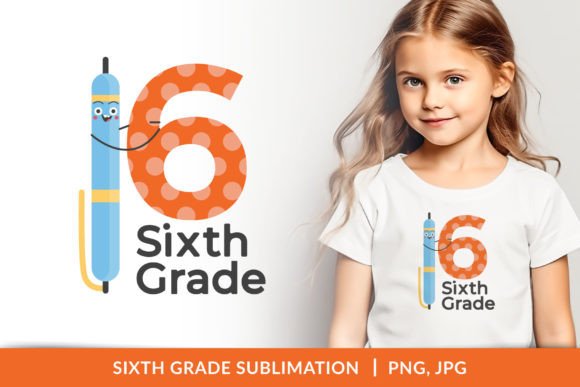
Sixth Grade sublimation refers to a digital printing process used to produce custom apparel, banners, posters, and classroom materials featuring “Sixth Grade” lettering or themed design elements—often with school spirit, academic milestones, or age-appropriate visuals. Unlike standard screen printing or vinyl cutting, sublimation transfers dye-based inks directly into polyester fabric or specially coated substrates using heat and pressure. The result is durable, full-color graphics that won’t crack, peel, or fade under normal use.
This method is especially common for back-to-school preparations—teachers ordering class banners, PTA groups creating t-shirts for orientation events, or families personalizing keepsake items. Sixth Grade sublimation designs typically include clean, legible typography (e.g., bold “Sixth Grade” lettering), school colors, minimal icons (graduation caps, pencils, stars), and scalable layout options optimized for printing on various formats.
Why Consider Sixth Grade Sublimation?
People explore Sixth Grade sublimation primarily for three practical reasons: consistency, scalability, and durability. When coordinating group items—like matching t-shirts for an entire grade level or uniform banners for hallway displays—sublimation ensures color accuracy and sharp text across dozens or hundreds of units. It also supports photorealistic gradients and fine details, making it well-suited for designs requiring clarity at multiple sizes (e.g., small name tags and large wall posters).
Additionally, Sixth Grade sublimation files are often delivered as production-ready assets: one PNG with transparent background for layering or digital use, and one high-resolution JPG (6445 × 8183 px, 300 DPI) suitable for professional printing. This dual-format delivery reduces prep time for designers, educators, or print service providers who need both flexibility and fidelity.
Benefits and Real-World Tradeoffs
The main benefit of Sixth Grade sublimation lies in its integration of design and function. Because the ink becomes part of the material surface—not a layer on top—it resists wear from washing, folding, or daily handling. That makes it ideal for t-shirts worn throughout the school year or banners hung in high-traffic areas.
However, sublimation has limitations worth acknowledging. It works best on light-colored, polyester-rich fabrics (typically ≥65% polyester) or rigid substrates with polymer coatings (e.g., aluminum signs, ceramic mugs). Cotton-only garments, dark fabrics, or uncoated paper cannot accept sublimation dyes effectively without additional pre-treatment or alternative methods—adding cost and complexity.
Color reproduction is another consideration. While sublimation excels at vibrant, continuous-tone output, it cannot reproduce true blacks or deep shadows as richly as offset printing or pigment-based inkjet processes. Designers should preview CMYK-to-sublimation color profiles before finalizing palettes, particularly when matching school brand guidelines.
When Sixth Grade Sublimation Is a Strong Fit
Sixth Grade sublimation is most appropriate when you need consistent, long-lasting output across multiple identical or near-identical items—and when your substrate choices align with technical requirements. Examples include:
- Custom t-shirt orders for a sixth-grade orientation event, where durability and wash resistance matter;
- Classroom welcome banners printed on polyester-coated vinyl or fabric panels;
- Digital templates reused across years, with minor edits (e.g., updating the year or teacher name);
- Small-batch projects where setup costs for screen printing would be prohibitive.
In these cases, the ability to scale from one item to fifty without quality loss—and the ease of reordering with updated details—adds measurable value.
When Alternatives May Be Worth Considering
Sublimation isn’t universally optimal. If your project involves cotton-heavy t-shirts for student giveaways, direct-to-garment (DTG) printing may offer broader fabric compatibility and softer hand-feel. For single-use paper posters or handouts, high-resolution inkjet or offset printing delivers sharper text and better contrast at lower per-unit cost.
Similarly, if you need physical mockups quickly—or lack access to a heat press or sublimation-capable printer—standard vector-based designs (e.g., SVG or EPS files) paired with local print services may simplify execution. Some users mistakenly assume Sixth Grade sublimation files are plug-and-play; in reality, successful output requires compatible hardware, calibrated temperature/pressure settings, and substrate testing.
Practical Decision-Making Insights
Before committing to Sixth Grade sublimation, assess three factors: your material, your volume, and your timeline.
Material: Confirm whether your intended substrate (e.g., t-shirt fabric, banner material) is sublimation-compatible. Check fiber content labels or consult your print provider. If not, consider DTG, heat transfer vinyl (HTV), or hybrid approaches.
Volume: Sublimation shines for mid-volume runs (10–200 units). Very small batches (<5) may be more efficiently handled via HTV or iron-on transfers; very large orders (>500) may benefit from screen printing’s economies of scale—especially for single-color or limited-palette designs.
Timeline: Sublimation requires drying time post-transfer and careful alignment during pressing. Rush orders may face bottlenecks unless your vendor maintains dedicated capacity. In contrast, digitally printed posters or PDF-based templates can be produced and shipped faster.
Also consider file readiness. The included PNG (transparent background) supports easy integration into Canva, Adobe Express, or other design tools for quick customization. The high-res JPG (6445 × 8183 px, 300 DPI) meets commercial print standards—but verify bleed and safe-zone margins with your printer before sending to press.
Final Considerations for Educators and Organizers
Educators selecting Sixth Grade sublimation assets should prioritize clarity over ornamentation. Sixth Grade lettering must remain legible at arm’s length (for banners) and chest-level (for t-shirts). Avoid overly decorative fonts or tight kerning that compromises readability—especially for younger viewers or those with visual processing differences.
From a logistical standpoint, keep version control simple. Label files clearly (e.g., “SixthGrade_Banner_Sublimation_v2.png”) and store both PNG and JPG versions together. If sharing with volunteers or external designers, include brief usage notes: recommended minimum font size, safe margins, and preferred color mode (CMYK for print, RGB for digital previews).
Ultimately, Sixth Grade sublimation is a tool—not a solution in itself. Its value emerges when matched thoughtfully to material constraints, production capacity, and functional needs. Evaluating it alongside alternatives—rather than treating it as a default—helps ensure better outcomes for back-to-school initiatives, classroom branding, or commemorative projects.